An increasing knowledge concerning the genetic code helped us to better understand the mechanisms of translation. Now being a text-book knowledge, the genetic code is made up of 64 codons, of which 61 code for amino acids and three for stop codons. Corresponding number of tRNAs is needed for pairing with complementary triplets in mRNA … Continue reading Codon Reassignment: Breaking the Rules of Genetic Language
From RNA Editing to Nobel Honors: Revolutionizing RNA Based Therapeutics
Gene expression is intricately controlled through various regulatory layers, spanning from transcription to post-translational modifications. In 1970, the discovery of RNA editing marked a pivotal moment in molecular biology, unveiling N6-methyladenosine (m6A) as the first identified RNA modification. Today, RNA editing stands as a crucial facet of gene regulation, contributing not only to our understanding … Continue reading From RNA Editing to Nobel Honors: Revolutionizing RNA Based Therapeutics
The New Enlightenment: The Genomic Revolution
The beginning of the 20th century was marked by remarkable advancements in physics. The theories of relativity and quantum mechanics revolutionized our understanding of the universe. However, in the 21st century, things have taken a different turn. We are currently experiencing the genomic revolution, with biologists at the forefront. Breakthroughs in this field have significantly … Continue reading The New Enlightenment: The Genomic Revolution
RNA Interference: A Leap In Molecular Biology
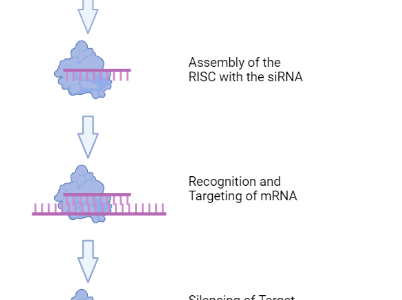
Gene silencing is an extremely important phenomenon occurring within cells to control processes such as homeostasis and development. This is achieved through the alteration of gene expression patterns via various mechanisms. The significant advancements in molecular biology have placed considerable pressure on the development of gene silencing techniques to study gene function and regulation and … Continue reading RNA Interference: A Leap In Molecular Biology
Natural Sciences, Applied Sciences: The Distinction
Classification of scientific branches and fields has proven to be a debatable subject, yet it is an important criterion for understanding the acquisition of knowledge and satisfying our curiosity. By understanding this classification, we can refine and enhance our way of thinking and problem-solving in the real world. Two major and broad categories of scientific … Continue reading Natural Sciences, Applied Sciences: The Distinction