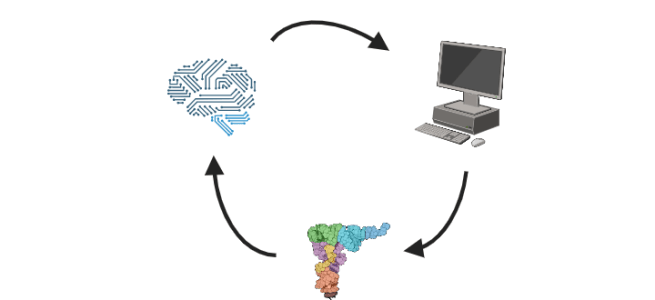
RNA biology and biochemistry studies have become a hotspot in basic and translational research. This is because RNA is not only a bridge between the genetic code and proteins, but it is also a key regulator of gene expression at multiple levels. Being that a key regulator makes various types of RNA molecules responsible for cancer and diseases. Unlike the success in protein three-dimensional (3D) structure prediction by computational methods, RNA still did not get its moment in the sun. Here, I discuss the importance, challenges, and progress in RNA 3D structure prediction.
The Importance of RNA 3D Structure Prediction:
While the linear nucleotide sequence of RNA provides the basic code, it’s the 3D structure that dictates the function. Unlike the relatively stable double helix of DNA, RNA exhibits a remarkable diversity of structures, including hairpins, loops, and pseudoknots. The different folds and conformations of the RNA molecule in 3D space determine the interaction possibilities with other molecules such as proteins or small ligands.
These interactions can help predict the role of such a molecule in gene expression or protein synthesis, for example. RNA 3D structure can aid in the search for the origin of life, whether it originated from RNAs. Furthermore, it can contribute to RNA therapeutics, which is also gaining a lot of attention, and help in understanding RNA-caused pathologies. One importance lies in predicting the possible interactome of RNA viruses and how they hijack host cellular apparatuses.
All the mentioned diverse possibilities to benefit from RNA 3D structure prediction make it a fantastic tool to develop and play with now.
Challenges in RNA 3D Structure Prediction:
Predicting RNA 3D structure is a rather challenging endeavor. Despite significant progress, there are still many limitations. The inherent complexity of RNA 3D structure is one major limitation, as RNAs are highly diverse and dynamic with features such as hairpins, loops, and pseudoknots. This particularly interesting molecule can form non-canonical bonds that are hard to predict.
In addition, one RNA molecule can undergo conformational changes and take more than one folding pattern depending on its interactome and its environment. Speaking of which, environmental factors, like metal ions and ligands, should be taken into consideration while predicting RNA 3D structures, adding to the challenge.
The scarce experimental data and their poor resolution and quality are other limitations for advanced machine and deep learning tools to predict the structures. The sheer number of possible conformations and the need to simulate the dynamic behavior of RNA molecules demand substantial computational power and time.
Advancements in the Field:
Although knowledge of how RNA folds in 3D space lags behind that of proteins, there has been some decent advancement in the field supported by the exponential increase in technological and computational strength. Here are some lights at the end of the tunnel we have now.
One approach is the Ab initio folding method. This method extracts knowledge-based energy from known RNA structures, which are computational models to estimate the potential energy of a molecular structure based on statistical information derived from experimental data or databases, to predict the 3D folding. Another method is fragment assembly. It assembles structural fragments from a templates library to give a whole structure. Deep learning-based methods are the best hope we hope. They are based on algorithms that learn the 3D coordinates and chemical element type of each atom and not just each residue from an experimentally studied 3D structure to predict the structure with high resolution and accuracy. Yet, for such a method, the lack of enough experimental data is a serious limitation.
It is here where computational prowess meets biological complexity. Although there is a lot of advancement in RNA 3D structure prediction, the road remains long, and a lot of obstacles and challenges are to be overcome. This unfolding saga promises not only scientific breakthroughs but also practical applications that could reshape the landscape of medicine and molecular biology.
References:
Schneider, B. et al. When will RNA get its AlphaFold moment? Nucleic Acids Research 51, 9522–9532 (2023).
Zhang, J., Fei, Y., Sun, L. & Zhang, Q. C. Advances and opportunities in RNA structure experimental determination and computational modeling. Nat Methods 19, 1193–1207 (2022).
Image created on Biorender

 RNA Stuff